Kevin Murray · Murray Financial Services
Decades of Freedom: How Longevity Can Impact Your Retirement

How long will your retirement last if you stop working at age 60?
There’s obviously no definitive answer, but the latest data on life expectancies can tell us a lot.
These days, retirement can last at least 20 to 25 years if you retire at 60.1 That’s around a decade longer than a 60-year-old retiree 50 years ago.2
And if you’re not retiring for another 10+ years, you could be looking at an even longer life expectancy in retirement.3
That means a 30, 40, or even 50-year retirement for some—allowing for, essentially, an entirely new life.
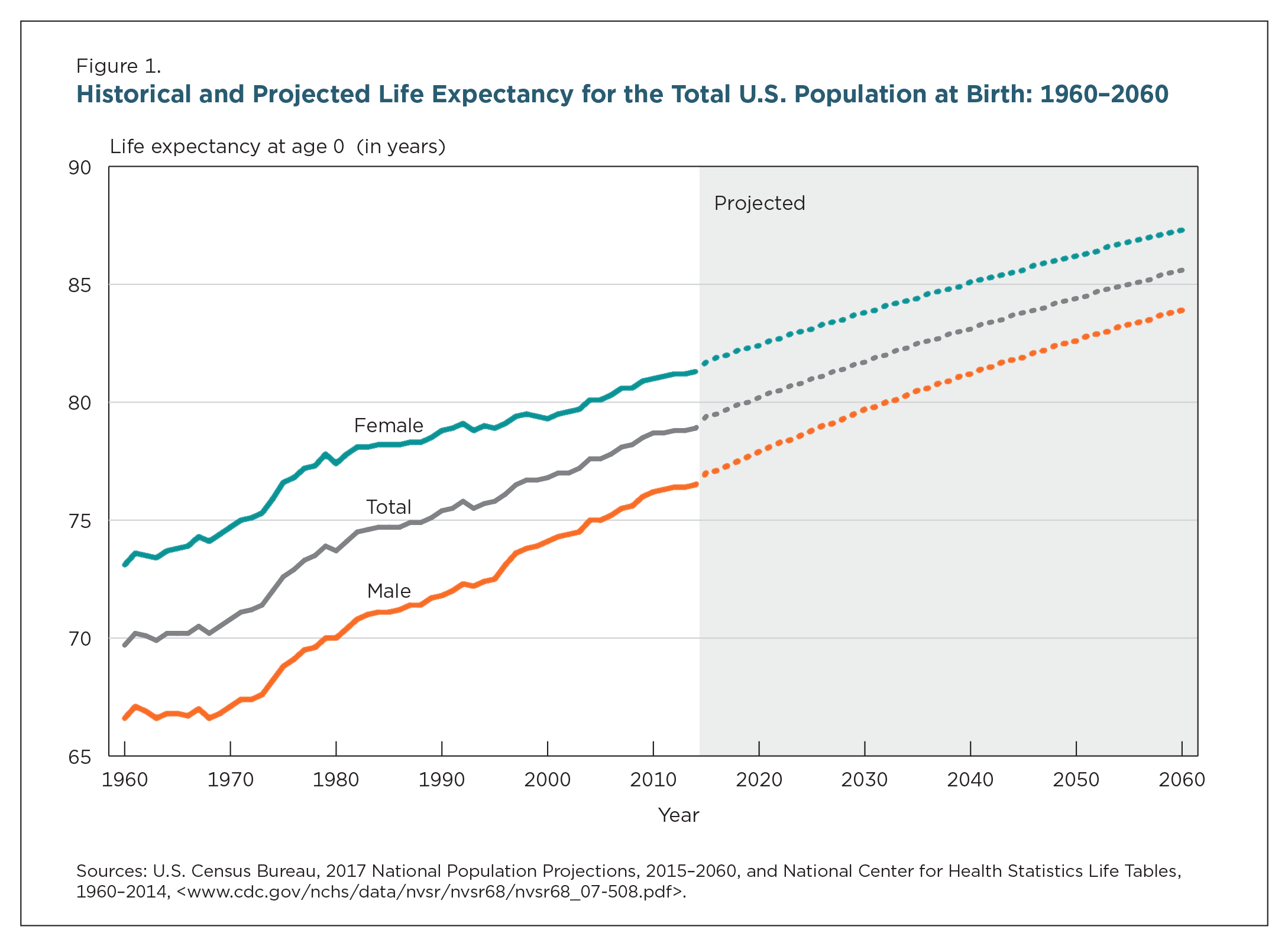
And though the gift of more time is certainly welcome, there can be obstacles. Which, if not met head-on in your retirement planning, could prevent you from experiencing the post-work bliss you deserve.
Here are 6 things to consider when factoring longevity into your retirement.
Not receiving our newsletter?
Get insightful info on finances and more in your inbox every month with the
VISUAL INSIGHTS NEWSLETTER
6 Considerations for a Fulfilling, Long-Lasting Retirement
Your Health & Wellness
It’s a simple and effective equation: The more you take care of yourself, the more years you’ll spend doing what you want with the people you love. Plus, prioritizing your health won’t just improve your quality of life, it can also help minimize your healthcare costs.
Tip: You probably know the drill by now. Maintain a healthy lifestyle, eat a nutritious diet, exercise regularly, and stay current on your regular medical check-ups.
Your Long-Term Care Plans
By the time you’re 65, according to recent averages, there’s a 70% chance you will need long-term care (LTC). Options may include adult day care, in-home care, or a private room at a nursing home, for example.1
If LTC is needed, you could be facing bills that range from $1,600 to more than $8,500 a month.1 And you may have to cover these charges for the next 20 to 25 years.
Tip: Even if you’re in tip-top health, to be safe, it’s best to crunch the numbers now. Don’t forget to factor inflation into your projected calculations.
Your Time
The thought of free time may seem like a luxury now, but for some retirees, boredom can be a problem. An overabundance of empty time in retirement can cause stress, depression, and other negative impacts that could take a serious toll on your mental and physical health.4
Tip: To avoid the excess TV or clock-watching, set up a flexible life plan before you retire, and if you’re already retired—start now. Consider going back to school, practicing your hobbies, volunteering, and traveling. And be open to pivoting and trying new things if your initial plans don’t work out.
Your Back-Up Plan
What type of financial “safety nets” do I have in place? Asking yourself this question can spotlight how much you really need to save, what resources you may need, and how to gain a stronger financial footing in the future.
Tip: Have a crystal clear understanding of your Social Security and/or other forms of guaranteed income, and how each could bolster your current retirement plan.
Your Relationships
What do most people miss when they stop working? It’s not the satisfaction of a job well done. It’s the social relationships they leave behind.5 Retiring can also disrupt your relationship with yourself and your loved ones, creating unexpected shifts in communication and socialization.
Tip: Give yourself the space to redefine your identity and purpose in retirement, then devote time to meaningful relationships. Set up regular social events, such as taking a new class, going on walks with the neighbors, having a regular date night, or hosting a weekly family dinner.
Your Support System
Beyond friends and family, where can you turn for advice or guidance when things become tough? Who’s your sounding board when you have to make complex decisions? And who can you rely on to help you see those proverbial blind spots?
Even just one professional you trust can be a powerful support system, especially when markets shift or plans go off the rails.
Tip: Before and after you retire, check in routinely with a financial professional. Consider it a “financial wellness” check to help ensure a long, satisfying retirement.
“Retirement is wonderful if you have two essentials—much to live on and much to live for.”
FINANCIAL LESSON:
Empowered Planning for Longevity in Retirement
If you retired tomorrow, would your current retirement plan allow you to thrive for 30+ years?
What part of your plan would be (or is) the weakest?
Answering those questions is essential, as the markets, the economy, and your life will continue to shift throughout the future.
And when they do, your retirement strategy will need to evolve.
What could help tomorrow, next year, and decades down the line, is guidance from a financial professional today.
Sincerely,
Kevin Murray
Murray Financial Services
https://murrayfinancialservices.com

Kevin Murray
Murray Financial Services



Not receiving our newsletter?
Get insightful info on finances and more in your inbox every month with the
VISUAL INSIGHTS NEWSLETTER
Kevin Murray
Murray Financial Services



Sources
1. https://money.usnews.com/money/retirement/articles/how-living-longer-will-impact-your-retirement
2. https://www.fool.com/research/average-retirement-age/
3. https://www.census.gov/content/dam/Census/library/publications/2020/demo/p25-1145.pdf
4. https://www.ncbi.nlm.nih.gov/pmc/articles/PMC9916207/
Chart Source: https://www.census.gov/content/dam/Census/library/publications/2020/demo/p25-1145.pdf
Risk Disclosure: Investing involves risk including the potential loss of principal. No investment strategy can guarantee a profit or protect against loss in periods of declining values. Past performance does not guarantee future results.
This material is for information purposes only and is not intended as an offer or solicitation with respect to the purchase or sale of any security. The content is developed from sources believed to be providing accurate information; no warranty, expressed or implied, is made regarding accuracy, adequacy, completeness, legality, reliability, or usefulness of any information. Consult your financial professional before making any investment decision. For illustrative use only.
This information is not intended to be a substitute for specific individualized tax advice. We suggest that you discuss your specific situation with a qualified tax professional.
Murray Financial Services (“RIA Firm”) is a registered investment adviser located in Chico, CA. Murray Financial Services may only transact business in those states in which it is registered, or qualifies for an exemption or exclusion from registration requirements. Murray Financial Services s web site is limited to the dissemination of general information pertaining to its advisory services, together with access to additional investment-related information, publications, and links. Accordingly, the publication of Murray Financial Services’ s web site on the Internet should not be construed by any consumer and/or prospective client as Murray Financial Services’ s solicitation to effect, or attempt to effect transactions in securities, or the rendering of personalized investment advice for compensation, over the Internet. Any subsequent, direct communication by Murray Financial Services with a prospective client shall be conducted by a representative that is either registered or qualifies for an exemption or exclusion from registration in the state where the prospective client resides. For information pertaining to the registration status of Murray Financial Services, please contact the state securities regulators for those states in which Murray Financial Services maintains a registration filing. A copy Murray Financial Services’ s current written disclosure statement discussing Murray Financial Services’ s business operations, services, and fees is available at the SEC’s investment adviser public information website – www.adviserinfo.sec.gov or from Murray Financial Services upon written request. Murray Financial Services does not make any representations or warranties as to the accuracy, timeliness, suitability, completeness, or relevance of any information prepared by any unaffiliated third party, whether linked to Murray Financial Services’ web site or incorporated herein, and takes no responsibility therefor. All such information is provided solely for convenience purposes only and all users thereof should be guided accordingly. This website and information are provided for guidance and information purposes only. Investments involve risk and unless otherwise stated, are not guaranteed. Be sure to first consult with a qualified financial adviser and/or tax professional before implementing any strategy. This website and information are not intended to provide investment, tax, or legal advice.
Become an Insider
Get insightful updates on markets and the world delivered straight to your inbox every month.
No thanks
You're Signed Up!
Kevin Murray
Murray Financial Services
Stay tuned — an email from me is on its way to your inbox right now.